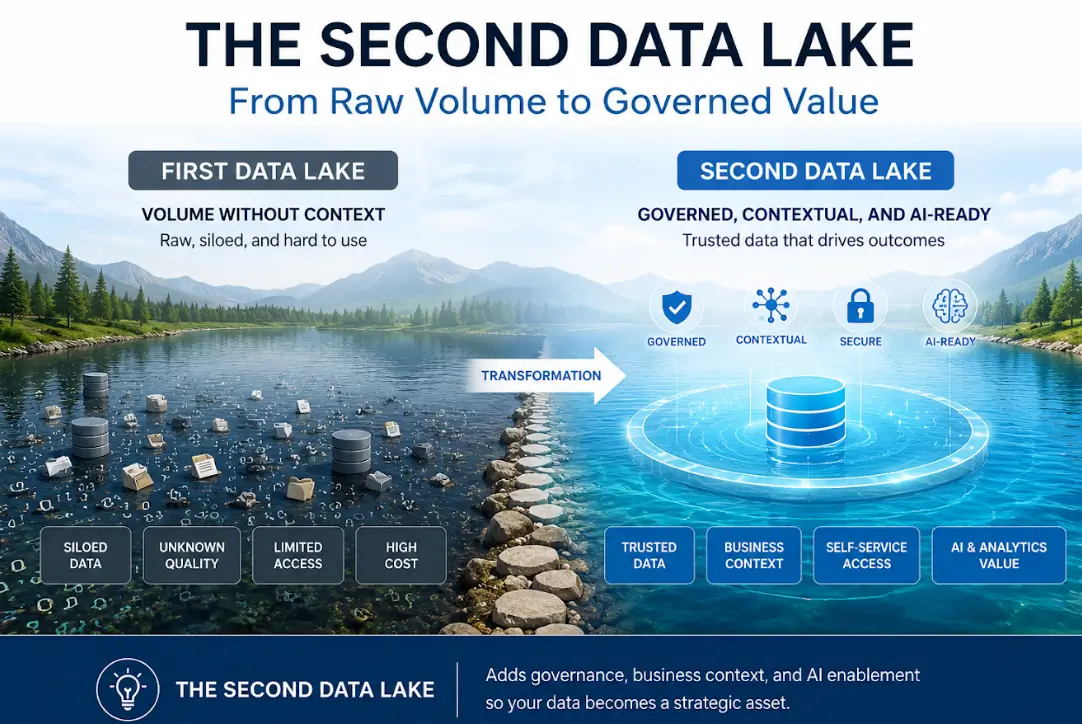
Best Practices for Building Semantic Data Platforms in Life Sciences

Semantic data platforms are transforming drug discovery by enabling AI systems to truly understand biological meaning, context, and relationships. But creating an effective semantic infrastructure is not trivial — it requires careful planning, domain expertise, and the right technologies. Why GenAI Fails in Drug Discovery and How Semantic Data Fixes It
In this article, we’ll explore best practices for building semantic data platforms that deliver real impact in life sciences and biotech AI.
1. Start With Clear Business and Scientific Goals
Before engineering begins, define:
✔ What problems the platform will solve
✔ Which use cases matter most (target ID, repurposing, safety, etc.)
✔ Which data sources are critical
✔ Expected outcomes and KPIs
Semantic platforms are most successful when they are goal-driven, not tech-driven.
2. Choose Robust Ontologies and Standards
Semantic systems depend on ontologies — structured frameworks that define entities and relationships.
Key sources include:
Gene ontologies
Chemical ontologies
Disease classification standards
Pathway networks
Best practices:
✔ Use community-accepted standards where possible
✔ Extend with custom ontologies when needed
✔ Maintain clear version control
This ensures consistency and reduces ambiguity.
3. Integrate Data From Multiple Domains
Life sciences data is fragmented across:
Genomics and proteomics
Clinical records
Literature databases
Chemical properties
Experimental results
Semantic platforms succeed when they unify:
✔ Cross-domain datasets
✔ Multiple modalities (text, numeric, categorical)
✔ Structured and unstructured sources
This creates contextual richness that AI systems need.
4. Leverage Knowledge Graphs as the Core Engine
Knowledge graphs represent entities and relationships in a graph structure — ideal for semantic platforms.
Benefits:
✔ Natural representation of biological networks
✔ Supports semantic querying
✔ Enables graph-based AI features and embeddings
✔ Facilitates explainable insights
Graph databases (e.g., Neo4j, Amazon Neptune, Blazegraph) power scalable semantic architectures.
5. Prioritize Data Quality and Normalization
Semantic platforms require:
✔ Entity normalization (e.g., gene names, drug identifiers)
✔ Elimination of duplicates
✔ Consistent naming standards
✔ Error-corrected datasets
Poor data quality undermines semantic accuracy and AI performance.
6. Build a Scalable Infrastructure
As data volume grows, platforms must scale. Best practices include:
✔ Distributed graph storage
✔ Efficient indexing
✔ Cloud-native deployment
✔ Data versioning and lineage
A robust infrastructure maintains performance as complexity increases.
7. Enable Explainable AI Integration
Semantic platforms should:
Provide traceable reasoning paths
Support AI model explanations using graph relationships
Enable users to understand predictions in biological terms
Explainability is critical for adoption in regulated environments like pharma.
8. Implement Governance and Compliance Controls
In life sciences, data governance is essential. Best practices include:
✔ Access controls
✔ Audit trails
✔ Semantic schema versioning
✔ Provenance tracking
✔ Compliance with clinical and privacy standards
Governance ensures trust and reproducibility.
9. Support Continuous Updates and Maintenance
Biology evolves rapidly. Semantic platforms must:
✔ Update ontologies
✔ Ingest new datasets
✔ Retire outdated relationships
✔ Maintain backward compatibility
Ongoing maintenance keeps the platform relevant.
10. Foster Collaboration Between Domains
Semantic platforms succeed at the intersection of:
Bioinformatics
Data engineering
AI/ML research
Domain science (biology/chemistry)
Cross-disciplinary teams ensure that semantic meaning aligns with both data science and biomedical intelligence.
Conclusion
Building a semantic data platform is not just a technical challenge — it’s a strategic investment in AI readiness.
When done right, semantic platforms unlock:
✅ Better AI prediction accuracy
✅ Deeper biological understanding
✅ Explainable models
✅ Faster hypothesis generation
✅ Competitive advantage in drug discovery
Semantic data platforms are the foundation of next-generation biotech AI.