Enterprise AI Data Discovery: Preparing Data for Scalable AI Agents
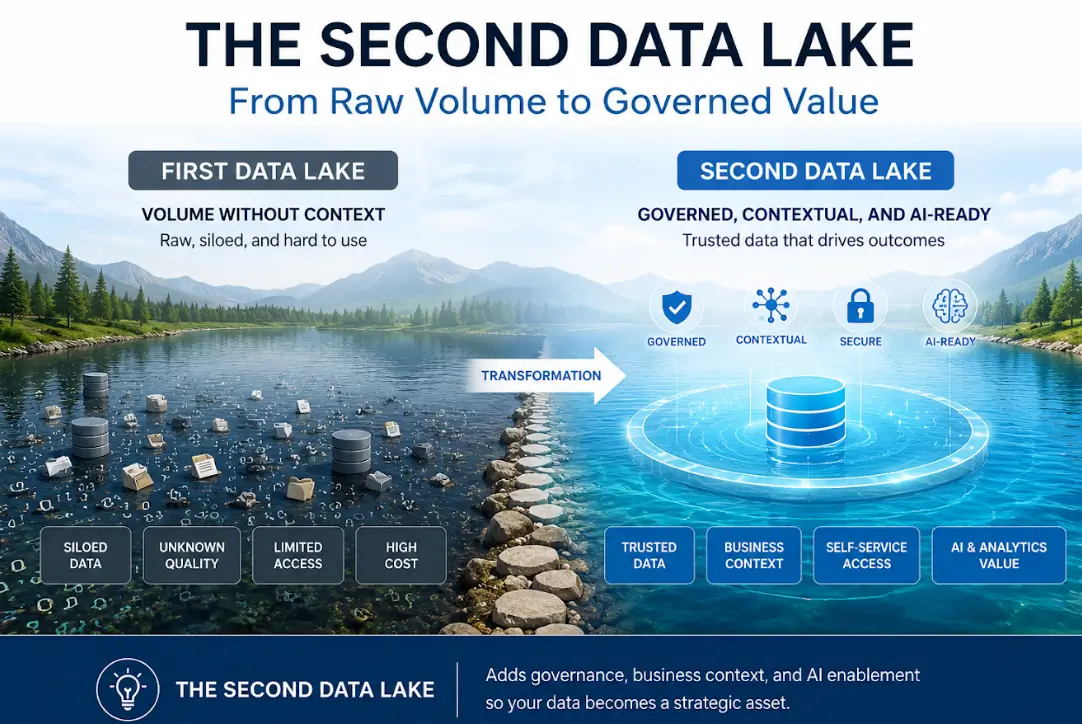
As enterprises rush to deploy AI agents, copilots, and intelligent automation, many discover a hard truth: AI cannot scale without discoverable, governed data. While models and tools evolve rapidly, data foundations often lag behind, creating performance issues, inconsistent outputs, and trust gaps. Data Discovery for AI: Fix Discoverability Gaps Before You Scale Agents
To scale AI agents successfully, organizations must first ensure their data is discoverable, contextual, and policy-aware. This article explains how enterprise data discovery enables scalable AI agents and what steps organizations must take to prepare their data for AI-driven execution.
Why AI Agents Depend on Data Discovery
AI agents are not static dashboards—they are dynamic systems that:
Interpret user intent
Retrieve relevant data
Reason across multiple sources
Generate responses or actions in real time
Without strong data discovery, AI agents:
Pull incomplete or outdated information
Produce conflicting results
Violate governance or compliance rules
Lose user trust
Data discovery ensures AI agents can find the right data at the right time with the right context.
The Role of Discoverability in Scaling Enterprise AI
Early AI pilots often work because they operate on limited datasets. However, as enterprises scale AI across departments, data complexity increases exponentially.
Scalable AI requires:
Unified visibility across structured and unstructured data
Standardized business definitions
Governed access and policy enforcement
Continuous metadata and lineage tracking
Without discoverability, scaling AI simply amplifies data chaos.
Key Capabilities Required for AI-Ready Data Discovery
To prepare data for scalable AI agents, enterprises must focus on the following capabilities:
1. Unified Data Catalog and Discovery Index
A centralized discovery index allows AI agents to:
Locate authoritative data assets
Rank datasets by relevance and trust
Understand ownership and usage policies
This ensures AI systems start every task from a trusted source of truth.
2. Semantic Context for Business Understanding
AI agents need more than raw data—they need meaning. A semantic layer provides:
Consistent definitions and KPIs
Business rules and relationships
Contextual understanding across domains
Semantic context prevents AI agents from delivering contradictory answers.
3. Governance and Policy-Aware Access
Enterprise AI agents must operate within:
Security controls
Privacy regulations
Data usage policies
Governed discovery ensures AI agents only access approved and compliant data, reducing risk.
4. Lineage and Explainability
For AI to be trusted, users must understand:
Where data came from
How it was transformed
Why a result was generated
Lineage enables explainable AI and supports audits, compliance, and accountability.
How Discoverable Data Improves AI Agent Performance
More Accurate Responses
When AI agents access well-described, current, and governed data, their responses become more precise and reliable.
Reduced Hallucinations
Discoverable data provides structured grounding, reducing the tendency of AI systems to fabricate answers when context is missing.
Higher User Confidence
Transparent data sources and consistent outputs increase trust and adoption among business users.
Best Practices for Preparing Data for Scalable AI Agents
Enterprises preparing to scale AI agents should:
Standardize metadata and business definitions
Implement a governed semantic layer
Automate data discovery and lineage capture
Expose data through secure, structured APIs
Continuously monitor data quality and freshness
These steps transform data discovery from a passive catalog into an active AI enablement layer.
Why Enterprises Must Fix Discoverability Before Scaling AI
Scaling AI without addressing discoverability leads to:
Increased operational risk
Poor user experience
Inconsistent business decisions
Regulatory exposure
In contrast, enterprises that invest early in data discovery build AI systems that scale safely, confidently, and efficiently.
Conclusion
Enterprise AI agents can only perform as well as the data they can discover and trust. Data discovery is no longer optional—it is the foundation for scalable, enterprise-grade AI.
By preparing data with semantic context, governance, and discoverability, organizations enable AI agents to deliver consistent value at scale. Before deploying AI broadly, enterprises must ensure their data is not just available, but discoverable, understandable, and governed.