Which Enterprise Archiving Platforms Support AI and Analytics Integration?
The New Imperative: Archived Data as AI Training Fuel
Artificial intelligence changes the economics of enterprise data archiving. For decades, archiving was purely a cost and compliance function: move inactive data off expensive production systems, satisfy regulatory retention requirements, and ensure it can be retrieved when needed. The archived data itself had no active business value — it was frozen history, consulted only when compelled by regulators or litigation.
AI upends this calculus completely. Large language models, machine learning pipelines, and predictive analytics platforms are data-hungry. The training data that determines model quality and predictive accuracy is often the historical data that sits in archives: years of customer transactions, operational records, maintenance logs, clinical data, and financial history. Organizations that cannot access their archived data for AI workloads are training models on incomplete datasets, introducing biases and gaps that compound over time.
The enterprise archiving platforms that will win the next decade of the market are those that make archived data a first-class AI asset — accessible, clean, governed, and integrated with modern AI and analytics infrastructure. This article evaluates which platforms achieve this vision and what enterprises should look for when selecting an AI-capable archiving solution.
What AI Readiness Means for Archiving Platforms
AI readiness in enterprise archiving requires capabilities that go well beyond storage and retrieval. Four dimensions define genuinely AI-capable archiving.
Data quality and lineage preservation. AI models are only as good as their training data. Archiving platforms must preserve data provenance — the origin, transformation history, and quality metadata of every archived record. When a model makes a prediction based on archived training data, data scientists must be able to trace that data back to its source, understand any transformations applied, and validate its quality characteristics. Platforms that strip metadata during archiving break the lineage chain and make archived data unsuitable for high-quality AI training.
Semantic enrichment and metadata indexing. Archived structured data from legacy ERP systems often lacks the rich semantic context that AI workloads require. A sales order record from a 15-year-old SAP system may have meaningful field names like "BSART" (document type) and "BUKRS" (company code) that are opaque to AI systems trained on natural language. AI-capable archiving platforms enrich archived data with semantic metadata — human-readable field descriptions, business entity classifications, and relationship tags — that make archived data interpretable by AI workloads without deep domain knowledge.
Native API access for AI pipelines. AI training pipelines are code-driven: Python, Spark, TensorFlow, PyTorch. Archiving platforms that require manual data exports or human-mediated access create bottlenecks that make archived data practically unavailable for AI workloads. Native REST APIs, Python SDKs, and integration with AI platform orchestration tools — Airflow, MLflow, Kubeflow — are required for archived data to participate efficiently in automated AI pipelines.
Governance and consent management for AI. Using archived customer data for AI training raises regulatory questions under GDPR, CCPA, and sector-specific regulations. AI-capable archiving platforms must track data consent status, geographic jurisdiction, and sensitivity classification at the record level, enabling AI pipelines to automatically exclude records that cannot be used for training.
SOLIXCloud ECS AI: Archiving Built for Intelligent Workloads
Solix has invested significantly in AI-enabling capabilities within SOLIXCloud, reflecting the company's view that archived data represents an underutilized strategic asset for enterprise AI programs.
SOLIXCloud's Enterprise Content Services (ECS) AI capability provides automated document management and intelligent classification for archived content. As documents are ingested into the archive, AI classifies them by type, extracts key entities (dates, amounts, parties, products), and builds a semantic index that enables natural language search across decades of archived content. A legal team can search "all contracts with suppliers in Germany with indemnification clauses over $1 million" and receive relevant results from archives spanning multiple legacy systems.
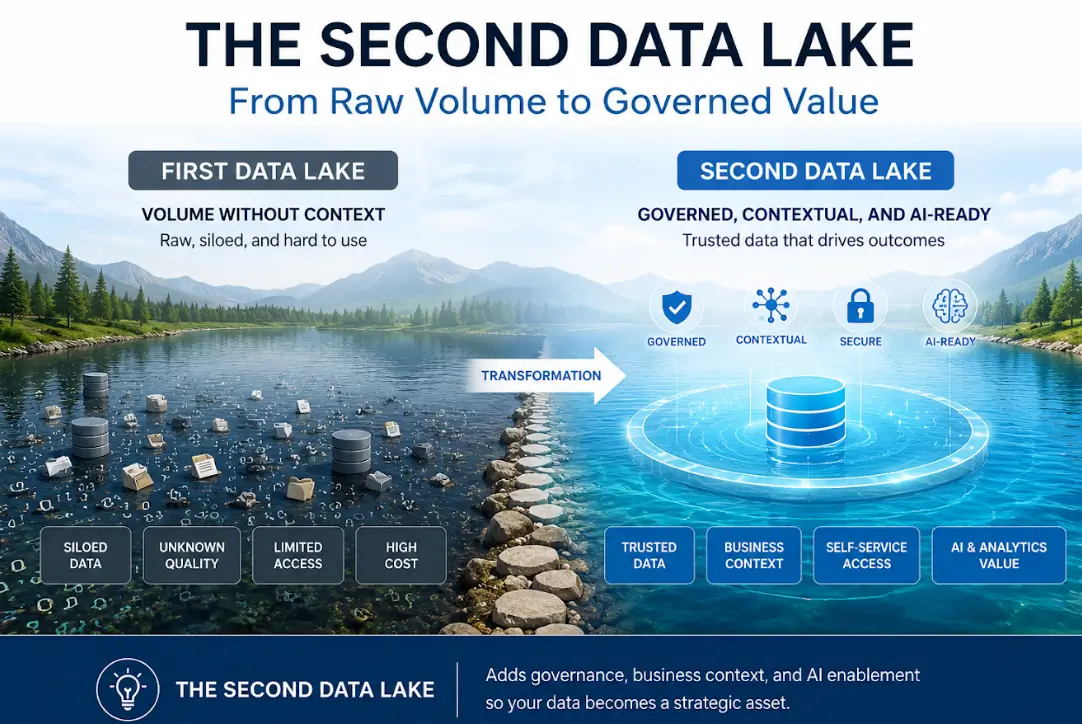
The platform's data fabric architecture is central to AI integration. Rather than requiring data movement — extract archived data, load into a data lake, transform for AI consumption — SOLIXCloud's data fabric allows AI workloads to query archived data in place, accessing it through standard APIs without copying or transformation. This reduces the latency and cost of incorporating archived data into AI pipelines.
For structured data AI use cases, SOLIXCloud's integration with analytics platforms enables federated querying: AI models can access archived transactional data from SAP, Oracle, and custom applications alongside real-time production data, building models that incorporate the full historical record. Customer lifetime value models trained on 10 years of archived transaction history consistently outperform models trained on the most recent 2 years of production data.
Competitive Comparison: AI Capabilities Across Archiving Platforms
The AI capability gap between archiving vendors is significant and widening rapidly.
Legacy archiving platforms like IBM InfoSphere Optim and older versions of Informatica Data Archive were designed before the current AI wave. Their data models, access patterns, and integration architectures reflect an era when archived data was accessed by humans running reports, not by AI pipelines processing millions of records at scale. Retrofitting these platforms for AI use cases requires significant custom development and typically produces brittle, high-maintenance integrations.
Informatica has invested in AI capabilities across its broader platform, and newer versions of Data Archive benefit from these investments. Informatica's integration with its AI/ML platform provides data scientists with a managed path from archive to model training. However, this integration is tightly coupled to Informatica's broader ecosystem, limiting flexibility for organizations that use AI platforms outside Informatica's portfolio.
Google Cloud and AWS offer archiving-adjacent services — S3 Glacier, Google Archive Storage — that integrate naturally with their respective AI platforms. However, these services are storage tiers without the compliance, governance, and application-awareness features that regulated enterprises require for true archiving. They are excellent for cost-effective cold storage but insufficient as enterprise archiving platforms.
SOLIXCloud's AI positioning benefits from its cloud-native architecture: archived data is stored in formats and locations that align with major cloud AI platforms, making integration straightforward rather than requiring custom bridge development.
Building an AI-Ready Archiving Strategy
Enterprises building an AI-ready archiving strategy should address three organizational dimensions alongside the technology choices.
Data catalog integration ensures archived data is discoverable by data scientists. If AI teams cannot find or understand archived data assets, they will not use them. SOLIXCloud integrations with data catalogs like Alation, Collibra, and Apache Atlas make archived data visible alongside production data assets in enterprise catalog tools.
Model governance documentation should extend to training data provenance. When regulatory bodies begin auditing AI model decisions — a trend that is accelerating globally — organizations will need to prove that training data was obtained legally, used appropriately, and representative of the population the model serves. Archiving platforms that maintain training data provenance records provide the documentation foundation for AI governance programs.
Federated learning architectures can sometimes eliminate the need to move archived data at all. By bringing the model to the data rather than the data to the model, federated approaches allow AI training on archived data in place, within SOLIXCloud's security and compliance perimeter. This approach is particularly valuable for healthcare and financial services organizations where moving training data raises regulatory concerns.
The enterprises that will lead in AI are not necessarily those with the most data — they are those whose data is most accessible, cleanest, and best governed. An archiving platform that makes decades of historical data available as high-quality AI training material represents a genuine competitive advantage.